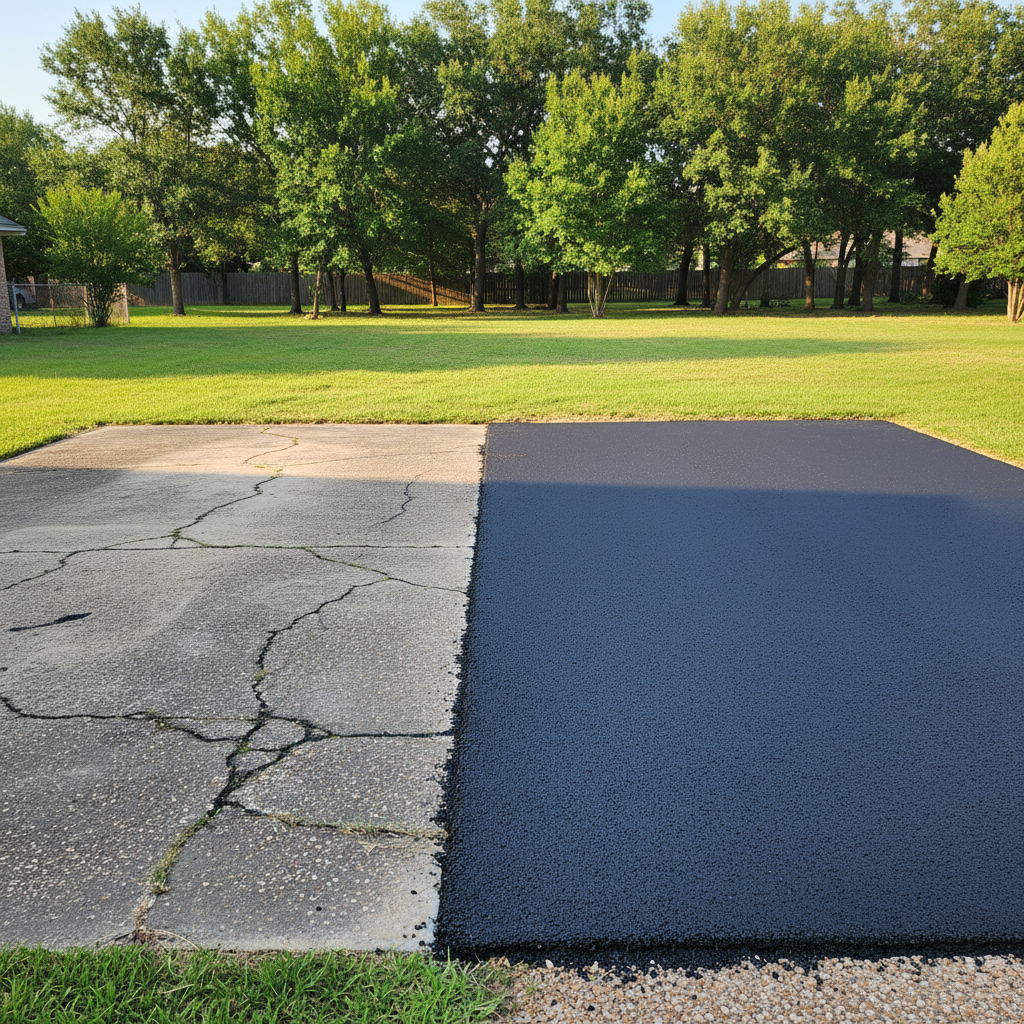
Your asphalt's seen better days, hasn't it? Cracks, potholes, maybe even some alligator cracking showing up. When you're looking at fixing that commercial parking lot or even a really big residential driveway here in San Marcos, you've essentially got two main paths to go down: an asphalt overlay or a full remove and replace. I see a lot of folks wrestling with this decision, and honestly, there's no single right answer for everyone. It really depends on the condition of your existing pavement and what you're hoping to achieve.
Asphalt Overlay: The Quick Fix?
Let's start with an overlay. What is it? Pretty simple, really. It's when we clean up your existing asphalt surface, maybe do some patching where it's really bad, and then lay a brand new layer of asphalt right on top of the old one. Think of it like putting a fresh coat of paint on a wall – it looks great, but if the wall underneath is crumbling, that paint isn't going to hold up for long.
The biggest pro here is usually the cost. It's almost always cheaper upfront than a full replacement because we're not tearing out and hauling away tons of old material. It's also quicker to do, meaning less disruption for your business or property. From an appearance standpoint, a fresh overlay looks fantastic. It's smooth, dark, and gives your property an instant facelift.
But here's the catch, and it's a big one: an overlay is only as good as the foundation underneath it. If your existing asphalt has deep structural issues – meaning the base layer beneath the asphalt is failing, or you've got extensive subgrade problems from our expansive San Marcos clay soils – then an overlay is just a temporary band-aid. Those cracks and failures from below will eventually reflect through the new layer, sometimes in just a year or two. We call that 'reflective cracking.' You might save money now, but you could be paying for it again sooner than you'd like.
Remove & Replace: The Long-Term Solution
Now, let's talk about the remove and replace. This is exactly what it sounds like: we come in, tear out all the old asphalt, sometimes even dig down into the base layer if it's compromised, and then rebuild the whole thing from the ground up. We're talking about new subgrade preparation, a fresh aggregate base, and then laying down brand new asphalt layers.
The main advantage here is durability. When you remove and replace, you're addressing the root causes of your pavement's failure. If your base is shot, or if you've got drainage issues causing constant problems, this is the way to fix it properly. You get a completely new, structurally sound pavement that, with proper maintenance like sealcoating, should last you 20 years or more. It's a true investment in your property.
The downsides? Cost and time. A full remove and replace is significantly more expensive upfront because of all the labor involved in demolition, hauling, and then rebuilding. It also takes longer to complete, which means more disruption for your business or residents. If you're running a busy retail center or an apartment complex, that downtime needs to be factored into your decision.
Which One's Right For You?
So, how do you decide? Here's what I tell folks:
- If your asphalt has minor surface cracking, fading, or shallow potholes, and the underlying base seems solid: An overlay could be a great, cost-effective option for you. It'll give you years of good service and a fresh look.
- If you've got extensive alligator cracking, deep potholes, areas that constantly hold water, or if you can feel the pavement flexing when you drive over it: You're likely looking at structural failure. In these cases, an overlay is just delaying the inevitable. You'll save money in the long run by doing a full remove and replace.
- Consider your budget and timeline: If cash flow is really tight and you just need to get by for a few years, an overlay might buy you some time. But if you're looking for a long-term solution and have the budget, remove and replace is the way to go.
Honestly, the best way to figure it out is to have a professional look at it. We'll come out, assess the condition of your pavement, maybe even do some core samples if needed, and give you an honest recommendation based on what we see. We're not going to push you into a full replacement if an overlay will genuinely serve your needs. At Valley Paving Co., we're all about giving you the right solution, not just the most expensive one.
Don't just guess. Get an expert opinion. It'll save you headaches and money down the road, especially with our Texas heat and occasional heavy rains putting constant stress on our roads and parking lots.